
Good air days

The new negative language will provide yet another daily reminder that this world is a scary, hazardous place, with hidden risk factors, toxins and carcinogens lurking around every corner.

Recent

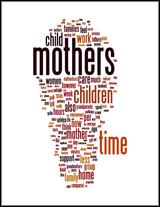
The Changing Face of Motherhood

Insights from three generations of mothers

Recession Generation

The report seeks to answer some specific questions about the changing face of motherhood and determine the extent to which modern ‘solutions’ to motherhood are more or less beneficial than the solutions of the past. more

The impact of the commercial world on children's wellbeing

Report of an independent assessment

The impact of the commercial world on children's wellbeing

Two years ago, in the Children's Plan, the DCSF committed itself to commission an independent assessment of the impact of the commercial world on children's wellbeing. That assessment, led by Professor David Buckingham, is now complete. As part of the process SIRC was commissioned to undertake two major reviews: Children and Family Life: Socio-Demographic Changes and The Ecology of Family Life. more

Recession Generation

Psychological impact & the lessons of recession

Recession Generation

There can be very few people in Britain who are unaware that we have been living in times of recession…It is clear that people — even those unaffected directly — are worried, especially about their future financial security. But are there some positive lessons to be learnt? more

Life in the UK today

The role and citizen impact of Public Service Broadcasting

Public Service Broadcasting

As a complement to the extensive work contributed by other players on the rapid advances in technology and consumer behaviour, the work is designed to review and present the available data on broader social trends which may impact on PSB in the future…more

No more good air days

And certainly no 'very good' air days.

In line with the current trend towards environmental doom and gloom, weather forecasters are no longer allowed to end their broadcasts with a cheerful "…and the air quality today will be Very Good". The very best we can expect to hear is that "pollution levels will be Low".

The old familiar air-quality categories Very Good, Good, Poor, Very Poor are out, replaced by the negative newspeak of Low, Moderate, High or Very High pollution levels. This is because the Minister for the Environment, in his wisdom, has decided that it is better for us to be warned that the glass is half empty, rather than lulled into a false sense of security by being informed that it is half full.

The claim is that the new classifications are 'more scientific'. This is nonsense. They are simply new ways of describing levels of nitrogen dioxide and four other gases. Recent research has added two new gases into the equation, but what is being described is still the quality of the air we breathe, and there is no scientific reason for choosing to describe it in purely negative terms. There is certainly no scientific justification for causing unnecessary fear and anxiety.

The move from talk of air quality to talk of pollution levels, from a beautiful morning to a not very dangerous morning, is a small but psychologically of the world we live in. The new negative language will provide yet another daily reminder that this world is a scary, hazardous place, with hidden risk factors, toxins and carcinogens lurking around every corner.

In a small way, the newspeak on air pollution will contribute to what sociologist Peter Berger calls the "cultural climate of pervasive anxiety" currently moving Eastwards across the Atlantic.